

18 Nov Why Paver Prices Vary So Much (and What You’re Actually Paying For)
Posted at 04:57h
in Backyard Ideas
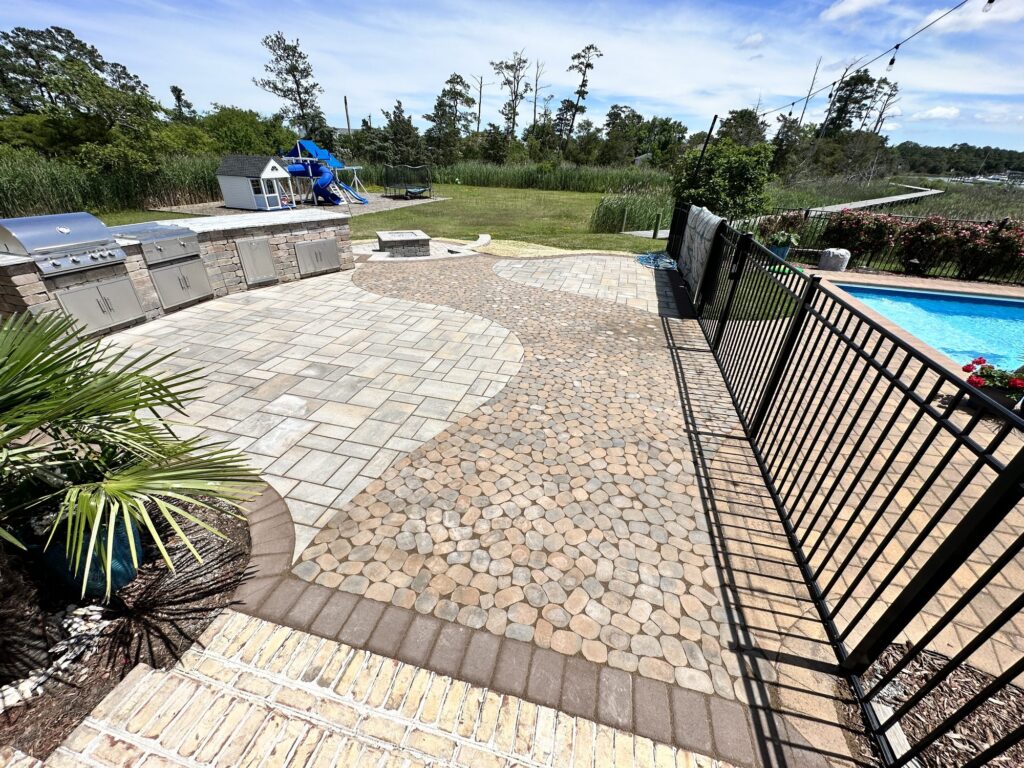
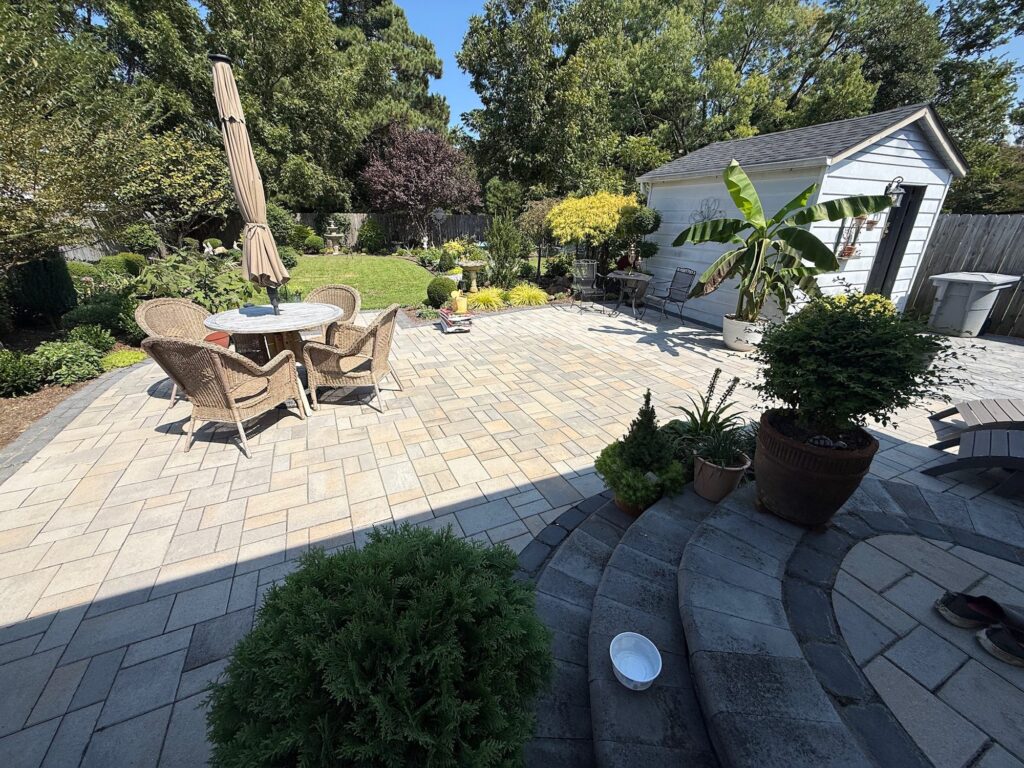
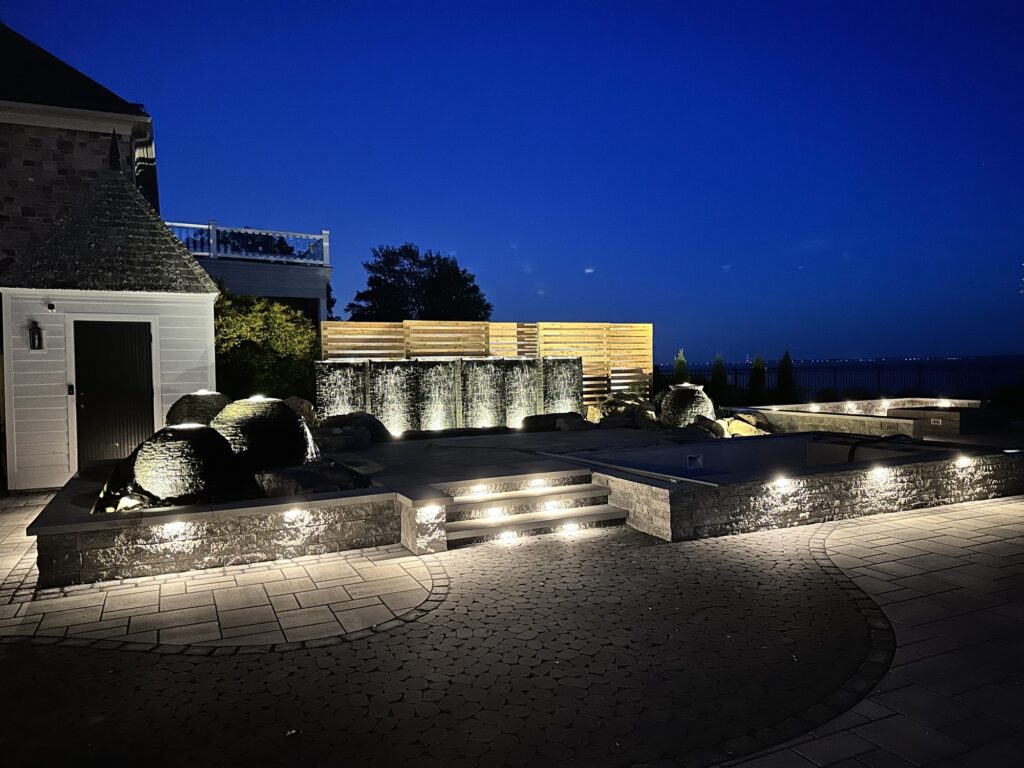

So here’s a conversation I have about once a week. A homeowner gets three quotes for a paver patio, and the numbers are all over the place. One guy is way under everybody else. One is way over. And the homeowner looks at me and says, “Micah, it’s the same patio. Why is this so different?”
It’s not the same patio. It’s the same square footage. Those are two different things. Let me walk you through where the money actually goes, because once you see it, the spread between quotes starts to make a lot of sense.
Everybody’s attention goes to the paver, because that’s the part you pick out at the showroom. Here’s the kicker: the paver is usually a little less than a third of the installed cost. On a typical patio, the material, the gravel and fabric under it, and the labor to lay it all land in roughly the same neighborhood, with a little bit more for cuts, soil disposal and edging.
So when one quote is dramatically cheaper, it almost never comes from the paver. It comes from what’s underneath it, or from what got left out.
The base is probably one of your less expensive parts of the project, but it is the most important part. A lot of times it gets ignored, and that’s where the issues happen down the road.
When we build a patio, the first thing that goes down is a woven fabric, the same kind they use in road construction. That fabric keeps the soil from working up into the gravel. When soil and gravel blend together, the gravel stops being gravel, and that’s what makes a patio settle. Then we put down an open graded base, which is number 57 stone, with a layer of number 8 chipped stone screeded on top. Open graded stone doesn’t hold water and it doesn’t hold debris, so it doesn’t move. Here in Virginia with our clay, that base ends up around six to seven inches deep, compacted as we go.
It costs a little bit more to do it like this. But in reality, when pavers fail, they were probably not installed correctly in the first place. A paver patio should last about 30 years, not five. If a quote is way under everybody else, ask what’s under the pavers. If the answer is “a couple inches of crush and run,” you just found the difference.
Pavers climb in price in steps, and the steps are real. At the bottom you’ve got a basic cobble. It’s fine. It’s a workhorse. One step up you’ve got the more regular block in a nicer color range. Then you’ve got face mix pavers, which have a hardened top layer with brighter color, better UV resistance and a longer life. Then there’s natural stone, which is a totally different budget tier altogether.
None of those are wrong answers. I’ve built beautiful spaces out of cobbles. But your preference drives the price, and two quotes with different pavers in them aren’t comparable until you line those up.
This one surprises people. The sand between the pavers matters. Polymeric sand is a little gummy and it’s the standard. Resin sand sets up as hard as concrete, you could literally file your fingernails on it, and it lasts longer. It adds a couple of dollars a square foot. Because we build on an open graded base, neither one affects how long the patio lasts, so this is a maintenance and look decision, not a structural one.
A plain rectangle of one paver is the fastest thing we lay. A good crew can do about 300 square feet in a day when it’s simple. Add a contrasting border, a circle inlay, a curve that connects back to the house, and every one of those adds cuts and time. I love a fat border, I’ll double it or turn it sideways because a thin one looks skinny, but I’m honest with people that it costs more than the field.
Edge restraint and upright edge pavers get priced by the linear foot, separate from the square footage. Some contractors fold that in, some don’t. Ask.
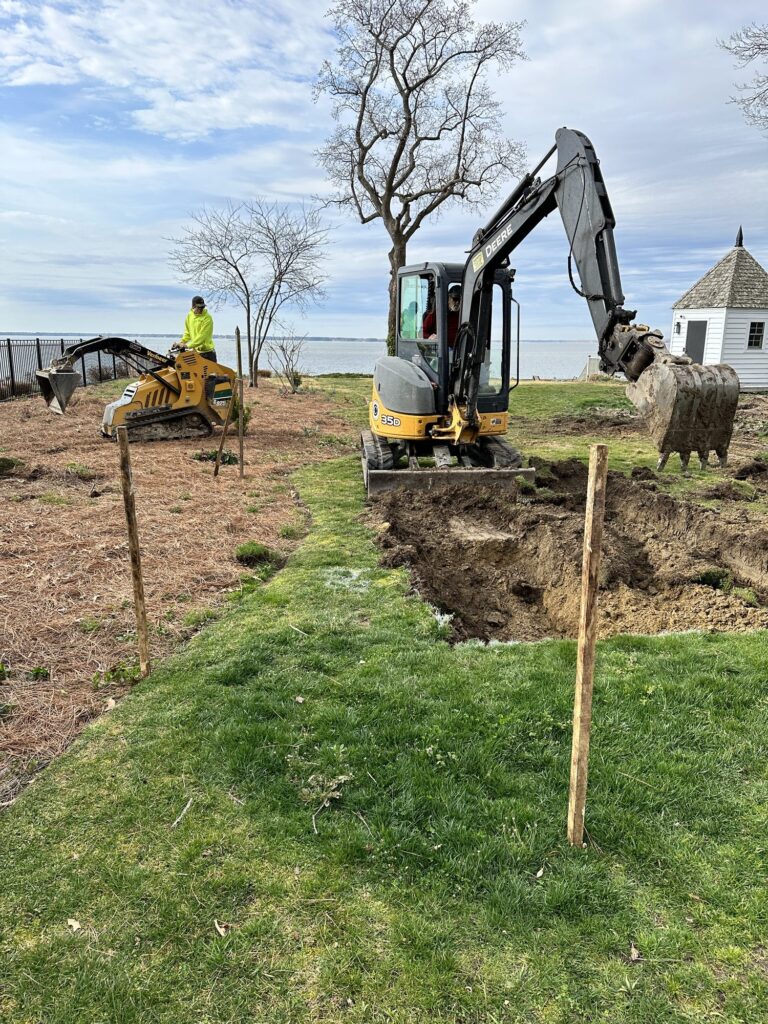
The square footage doesn’t tell you what it takes to get there. Tearing out an old deck, grinding stumps and hauling out the grindings, and getting dirt off the property all cost money. A courtyard we could only reach through double doors with no machines took three weeks instead of a few days, because limited access slows every part of the job. Two patios that are the same size can have very different quotes just because one has a 36 inch gate and the other has a clear shot for an excavator.
Drainage is in here too. If the yard is swampy and nobody addresses it, your patio is sitting in a puddle. We’ll regrade, run a downspout into 4 inch PVC under the patio, or build the paver section permeable when the elevations are tight. That’s not padding. That’s the reason the patio is still flat in year ten.
Here’s what I tell people. Don’t get excited over the price, ask questions:
That last one matters more than it sounds. When a crew installs to the manufacturer’s standard, a defective paver is covered, and I’ve had manufacturers pay for labor and materials on a replacement. The cheapest install usually voids that.
I’m not going to give you a hard number in a blog post, because the design visit changes the scope every time. What I will tell you is that pavers cost noticeably more than brushed concrete, and the gap gets wider as the space gets bigger. On a small patio pavers are often the better buy. On a huge driveway, we’ll mix the two: pavers at the apron and near the house where they make the impression, concrete in the middle. For current ranges on patios, walls, kitchens and fire features, go read our pricing guide. It’s the same guide I send people before a consult.
At the end of the day, you get what you pay for. If one guy is way cheaper than everyone else, there’s a chance he’s cutting a corner you can’t see. Pavers are a quality of life purchase, and the base you never see is what makes that purchase last.
Leave me a comment if you have questions. We just want you to make an educated decision, even if you’re not hiring us.
Get outside, my friends.